For many Australian companies, compliance used to feel relatively predictable. Policies were reviewed annually, mandatory training was completed, and most organizations operated comfortably within familiar regulatory frameworks.
That environment has changed.
Across industries, organizations are now facing constant legislative updates, stronger enforcement powers, growing employee expectations, and significantly larger penalties for non-compliance.
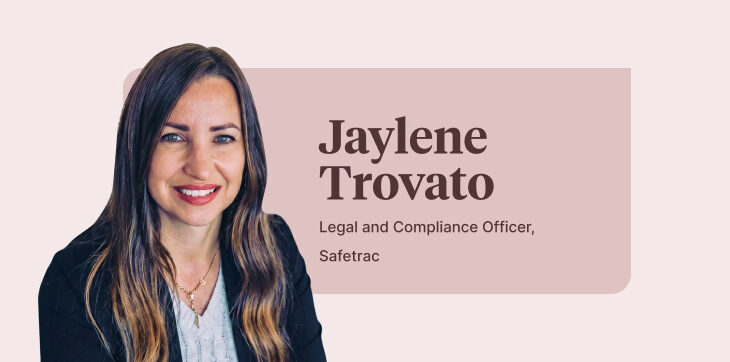
In a recent webinar hosted by iSpring, Jaylene Trovato , Legal and Compliance Officer at Safetrac, shared practical insights into the regulatory developments shaping Australian businesses today. From climate disclosures and privacy reform to cybersecurity governance and employee training, the discussion explored how organizations can build compliance confidence in an increasingly complex environment.
One message stood out throughout the conversation: compliance can no longer be treated as a once-a-year exercise. Businesses need ongoing education, stronger governance, and processes that help them adapt as requirements evolve.
What was compliant six months ago may already be outdated. The legislative landscape is shifting so fast. Every few months we’re updating courses and guidance to keep businesses compliant.
Jaylene Trovato, Safetrac
In this Q&A recap, we unpack the key insights from the webinar and explore how Australian businesses can navigate an increasingly complex compliance landscape. Watch the full webinar recording or get a head start with the main takeaways and expert recommendations below.
What are the key compliance risks emerging from climate disclosures? Climate-related reporting obligations are expanding quickly across Australia, particularly for larger entities. Businesses are now expected to provide greater transparency around how they assess and manage climate-related risks.
At the same time, regulators are increasing enforcement around environmental claims that may be vague, exaggerated, or unsupported. Jaylene explained that many organizations still underestimate how connected sustainability claims are to legal risk.
It’s not just a marketing issue anymore. It requires coordination between legal, compliance, and communications teams.
Jaylene Trovato, Safetrac
A common example involves businesses promoting products or packaging as “sustainable” or “environmentally friendly” without maintaining sufficient evidence to support those claims. Under current enforcement trends, even broad wording can attract scrutiny if businesses cannot substantiate their statements.
For many organizations, this means introducing stronger internal approval processes before environmental messaging is published publicly.
Why are privacy reforms becoming such a high-risk area for businesses? Privacy reform has become one of the most significant compliance developments affecting Australian organizations.
Recent legislative changes introduced:
stronger enforcement powers, tougher breach notification obligations, new transparency requirements, criminal offenses linked to harmful misuse of personal information Jaylene highlighted that the penalties associated with serious privacy breaches are now among the harshest seen across multiple jurisdictions.
The penalties now are really quite severe and some of the highest we’ve seen across many jurisdictions.
Jaylene Trovato, Safetrac
One particularly important development is the introduction of new doxxing offenses, which criminalize the harmful release of personal information online.
Rather than focusing purely on legal consequences, the discussion emphasized practical readiness. Businesses are increasingly being encouraged to review internal systems regularly, strengthen breach response plans, and ensure employees receive ongoing privacy training as legislation evolves.
How has cybersecurity become a business-wide responsibility? Cybersecurity is no longer viewed solely as an IT issue. Australian regulators increasingly expect boards and executive teams to treat cyber risk as a core operational and governance responsibility. Organizations are now expected to implement structured cyber risk frameworks, incident response plans, reporting procedures, and employee education programs.
Jaylene explained that technical controls alone are not enough if staff are not properly educated about cyber risks and reporting obligations.
It really involves ongoing monitoring, reporting, and most importantly training.
Jaylene Trovato , Safetrac
The discussion also referenced the Optus data breach as a major turning point that accelerated cybersecurity awareness and legislative reform across Australia. For many businesses, this has triggered a shift toward more frequent staff education, stronger governance oversight, and clearer incident escalation procedures.
Why are platforms like iSpring LMS becoming essential for compliance management? As compliance obligations become more complex, many organizations are moving away from manual training administration and adopting centralized learning management systems (LMSs).
These platforms help reduce administrative burden while improving visibility, consistency, and accountability across compliance programs.
Common examples include:
automatically assigning compliance courses to new hires, tracking overdue certifications, generating audit-ready reports, scheduling recurring reminders without manual follow-up The broader advantage is not simply efficiency — it’s confidence. Organizations gain clearer visibility into: employee progress, certification status, compliance gaps, and audit readiness across departments and locations.
This becomes particularly valuable for Australian businesses operating within fast-changing regulatory environments.
Why is proactive compliance the new standard? Towards the end of the discussion, Jaylene summarized what many compliance professionals are now recognizing across industries.
We want to move from being in a reactive space to proactive compliance.
Jaylene Trovato , Safetrac
That shift may sound simple, but it represents a major operational change for many organizations.
Businesses that adapt successfully are increasingly:
monitoring legislative developments continuously, updating training regularly, strengthening communication pathways, embedding compliance into day-to-day operations Today, proactive compliance is becoming less about avoiding penalties — and more about building resilient, trustworthy organizations prepared for ongoing change.
Final thoughts Audit readiness in Australia is no longer something businesses can review once a year and set aside. As regulations continue to evolve across climate reporting, privacy, cybersecurity, and workplace obligations, staying compliant requires ongoing attention, regular training, and a proactive approach. By combining expert guidance with the right technology and processes, organizations can build confidence and stay prepared for change.
for your mission-critical project
 5 min
5 min 5 min
5 min


 21 min


